Local SEO in Saudi Arabia is the work of getting your business found when nearby customers search on Google, Google Maps, Apple Maps, Snapchat and AI assistants. If you run a restaurant in Riyadh, a clinic in Jeddah or a car service in Dammam, most of your new customers now find you on their phone before they visit.
I have spent over seven years doing local SEO for Saudi businesses. The biggest lesson is simple: Saudi local SEO is not Western local SEO translated into Arabic. Customers search in dialect, by district, on Snapchat, and they message you on WhatsApp instead of filling in forms. This guide covers everything, step by step, from the basics to the advanced tactics we use for competitive clients.
What is local SEO and why is it different in Saudi Arabia?
Local SEO means improving your online presence so you appear in location-based searches. Think of searches like “مطعم قريب مني”, “dentist in Olaya” or “مغسلة سيارات حي النرجس”. The results that matter most are the Google Local Pack (the three businesses shown with a map) and the Google Maps app itself.
Five things make the Saudi market different:
- Mobile first. Almost every local search happens on a smartphone, and many users open Google Maps directly instead of Google Search.
- Mixed languages. People search in Modern Standard Arabic, in local dialect, in English and even in Arabizi.
- District level intent. Saudis search by حي (district), not only by city. “كافيه الملقا” is a very different search from “كافيه الرياض”.
- Social platforms as search engines. Snapchat, Snap Map and TikTok are real discovery tools, especially for food, beauty and entertainment.
- WhatsApp as the sales channel. Many leads come through a WhatsApp chat or a phone call, not a website form.
Vision 2030 is also creating new districts, new sectors like tourism and entertainment, and new cities. That means many local search results are still open for businesses that move first.
How Saudi customers search for local businesses
Before you optimize anything, you need to understand search behavior. Here is what we see across hundreds of Saudi local campaigns:
| Search type | Example | What it tells you |
|---|---|---|
| Service + city | مطعم مندي الرياض | Broad intent, high competition |
| Service + district | صالون نسائي حي الياسمين | Ready to visit, lower competition |
| Near me | أقرب صيدلية, قهوة قريب مني | Urgent intent, distance matters most |
| English search | best burger in Riyadh | Expats and younger users |
| Dialect spelling | برقر instead of برجر, كوفي instead of مقهى | Real customer language |
| Brand search | brand name + فرع | Existing customers looking for a branch |
The lesson: build your keyword list from how people talk, not from how a dictionary spells things.
How Google ranks local businesses
Google ranks local results using three main factors:
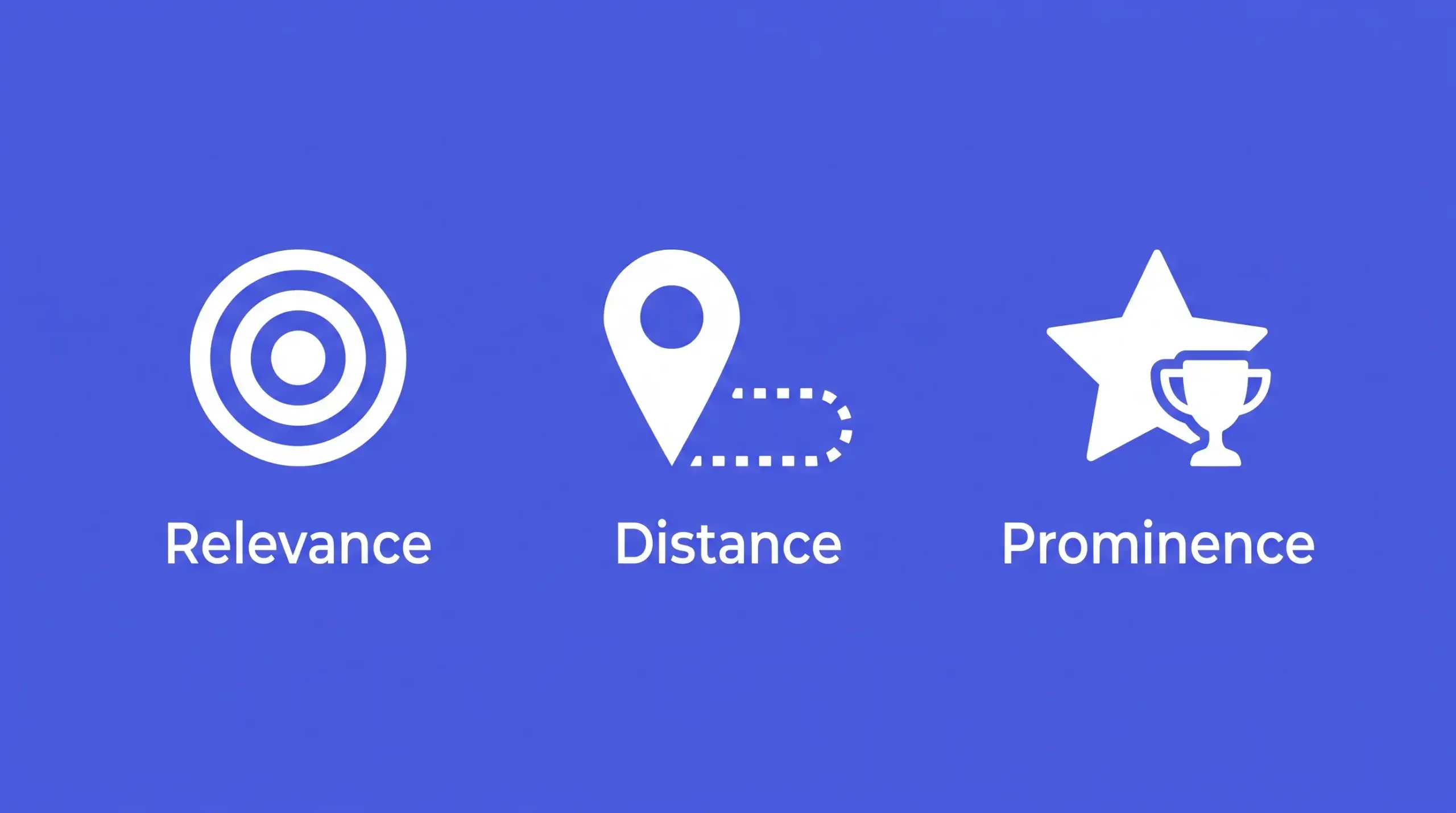
- Relevance. How well your profile and website match the search. Categories, services, description and content all count.
- Distance. How close your business is to the searcher or the location in the search.
- Prominence. How well known and trusted you are. Reviews, ratings, links, mentions and overall online activity all count.
You cannot move your shop closer to every customer, so you win by being more relevant and more prominent than competitors.
Step 1: Build a strong legal and NAP foundation
NAP means Name, Address and Phone number. Google compares your NAP across the web to confirm that your business is real. In Saudi Arabia you should also align it with your official records.
- Use the same business name as your Commercial Registration (CR), or the brand name customers know, and stay consistent.
- Register and use your Saudi National Address, including the short address code.
- Choose one official Arabic spelling and one official English spelling of your name. Never mix them.
- Use a local +966 phone number and connect WhatsApp Business to the same number if possible.
- Keep your details correct on official platforms like the Saudi Business Center.
Small differences such as “Al Noor Clinic” on Google and “Alnoor Medical Center” on a directory confuse search engines and weaken your ranking.
Step 2: Optimize your Google Business Profile
Your Google Business Profile (GBP) is the most important local ranking asset you own. Here is a complete checklist:
- Business name: your real name only. Adding keywords like “Best Dentist Riyadh” can get your profile suspended.
- Primary category: the most accurate one. Check what top competitors use.
- Secondary categories: add the ones that match real services.
- Description: write in Arabic first, clearly explain what you do and which areas you serve.
- Hours: add special hours for Ramadan, Eid and national holidays. Many Saudi businesses also close briefly for prayer, so make your hours honest to avoid bad reviews from people who arrive to a closed door.
- Attributes: family section, women friendly, parking, wheelchair access, and payment options like Mada, Apple Pay, Tabby and Tamara.
- Photos: a clear storefront photo from the street helps people find you. Add interior, team, products and fresh photos every month.
- Services and products: list them with short descriptions and prices where possible.
- Posts: share offers, news and seasonal updates weekly.
- Q and A: add common questions and answer them yourself.
- Messaging and call buttons: turn them on and respond fast.
- Ownership: the business owner should own the profile. Agencies should be managers, not owners.
Step 3: Get listed on Apple Maps, Snap Map and other maps
Google is not the only map in Saudi phones. iPhone use is high in the Kingdom, and many users open Apple Maps by default.
- Apple Business Connect: claim your place card, add photos, hours and actions.
- Snapchat: create a Public Profile for your business and claim your place on Snap Map. Many young Saudis discover cafes and restaurants here.
- Bing Places: quick to set up and feeds other services.
- Waze: useful for drivers in Riyadh and Jeddah traffic.
Step 4: Do Saudi focused keyword research
Good keyword research is where most agencies take shortcuts. Follow this process:
- List your core services in Arabic and English.
- Add every spelling variant and dialect word customers use.
- Add your city and each district you serve.
- Add near me forms: قريب مني, أقرب, حولي.
- Check Google Autocomplete and Google Maps autocomplete with your location set to Saudi Arabia.
- Read competitor reviews. Customers use the exact words you should target.
- Check TikTok and Snapchat search suggestions for trending phrases.
- Group keywords by intent: service, district, comparison, urgent, and brand.
Remember that each city behaves differently. Riyadh, Jeddah, the Eastern Province and Makkah and Madinah all have their own vocabulary and habits.
Step 5: Build a website that ranks locally
Your website supports your GBP. Google checks that both tell the same story.
- Speed: test on mobile data, not office Wi-Fi. Aim to pass Core Web Vitals.
- Real Arabic design: proper right to left layout and Arabic fonts, not a flipped English template.
- Contact buttons at the top: call, WhatsApp and get directions.
- One page per branch: unique text, branch photos, embedded map, hours, nearby landmarks and districts served.
- Service pages: one clear page for each main service. For service area businesses (AC repair, cleaning, moving), create city or district pages only when you can add real, useful local content.
- Language setup: Arabic as the main version, English as the second, with hreflang tags ar-SA and en-SA.
- Domain: a .sa or .com.sa domain can add local trust, but a strong .com works too.
- E-E-A-T: show real team members, licenses, years in business and customer stories.
Step 6: Add local schema markup
Schema markup is code that helps Google and AI tools understand your business. Add LocalBusiness schema (or a more specific type like Restaurant, Dentist or AutoRepair) on each location page. Include:
- Name in Arabic, plus English as alternateName
- Full address and geo coordinates
- Phone number
- Opening hours, including special hours for Ramadan and Eid
- Links to your GBP, Snapchat, Instagram and TikTok using sameAs
- Price range and accepted payments
Test your markup with Google’s Rich Results Test before publishing.
Step 7: Build citations on Saudi directories and apps
Citations are mentions of your NAP on other websites. They confirm that your business is real.
- Core platforms: Google, Apple Maps, Bing, Snapchat, Foursquare.
- Saudi directories: local yellow pages and business directories, plus your chamber of commerce listing.
- Industry apps: restaurants on HungerStation, Jahez, Keeta and Mrsool; clinics on medical booking platforms; property businesses on real estate portals.
- E-commerce: if your Salla or Zid store also has a physical shop, link the two clearly.
Then clean up. Duplicate and outdated listings are very common in Saudi Arabia, especially after a branch moves. Remove or merge them.
Step 8: Win with reviews
Reviews affect both ranking and whether people choose you. Here is what works in Saudi Arabia:
- Ask on WhatsApp. Send a short, friendly message with your review link after the visit. It works far better than email.
- Ask at the right moment. Right after a good experience, such as after a meal or a finished service.
- Reply to every review. Answer in the reviewer’s language, thank them by name, and stay calm and respectful with negative reviews.
- Encourage detail. Reviews that mention the service and the district help relevance naturally.
- Never buy reviews or offer rewards for them. Google removes them and can penalize your profile.
- Watch for fake attacks. In competitive sectors, fake negative reviews happen. Document them and report them through Google’s tools.
A steady flow of new reviews every month beats a big one-time push.
Step 9: Plan around the Saudi seasonal calendar
Search behavior in Saudi Arabia changes a lot during the year. Plan at least four weeks ahead:
| Season | What changes | What to do |
|---|---|---|
| Ramadan | Searches move late at night; iftar, suhoor and gift searches rise | Update hours, publish Ramadan offers and pages |
| Eid al-Fitr and Eid al-Adha | Holiday hours, gifts, clothes, travel | Update hours and posts before Eid |
| Founding Day (22 February) | Themed offers and events | Seasonal posts and landing pages |
| Saudi National Day (23 September) | Big promotions and brand activity | Offers, GBP posts, social content |
| Riyadh Season and other city seasons | Entertainment and dining searches rise | Event content, extended hours |
| Hajj and Umrah seasons | Huge demand in Makkah and Madinah | Multilingual pages, accurate hours |
| Back to school and summer | School, uniform, travel and cooling searches | Timely offers and content |
Step 10: Earn local links and create local content
Links from trusted Saudi websites build prominence. Good sources include:
- Saudi news and business websites
- Sponsoring local events, sports teams or community activities
- Partnerships with universities, suppliers and nearby businesses
- Local influencer and creator collaborations (with clear disclosure)
- Digital PR around Saudi occasions and Vision 2030 topics
For content, write what locals actually want: district guides, “best of” lists for your area, answers to common customer questions, and helpful guides in Arabic.
Step 11: Show up on social search and AI search (LLMs)
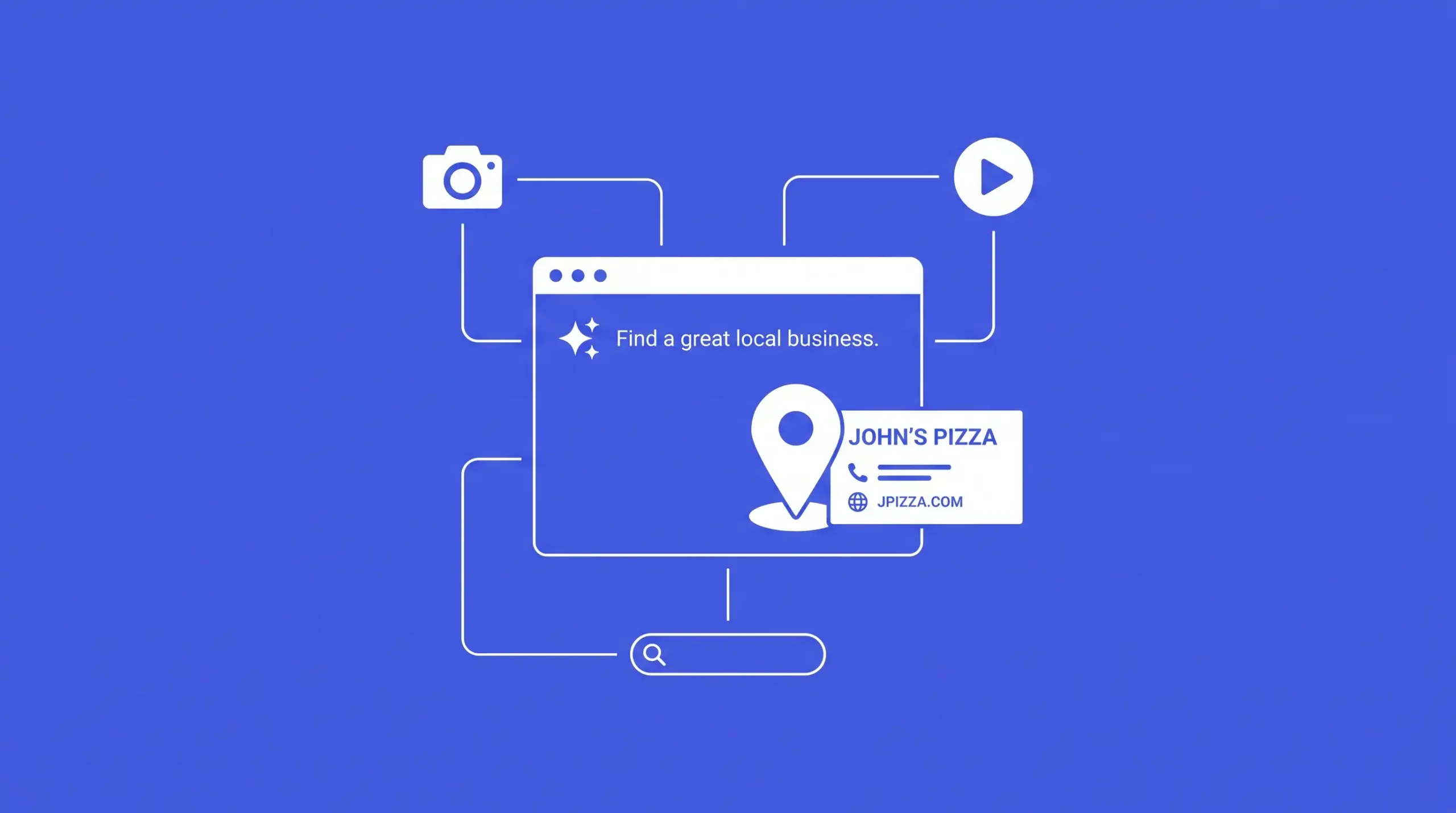
Search is no longer only Google. Your customers also ask Snapchat, TikTok and AI assistants.
Social search:
- Tag your location on every Snapchat, TikTok and Instagram post.
- Use Arabic keywords in captions and on screen text.
- Encourage customers to share content from your location.
- Invite local creators for honest visits.
AI search and LLMs: Tools like Google AI Overviews, ChatGPT, Gemini and Perplexity now recommend local businesses. They build answers from sources they trust. To be recommended:
- Keep your business facts identical everywhere so AI tools see one clear entity.
- Earn mentions in trusted Saudi articles, lists and directories.
- Collect detailed reviews that describe what you do well.
- Write clear FAQ content that answers real questions in simple sentences.
- Use schema so machines can read your details easily.
- Describe your business clearly: what you do, where, for whom and why you are different.
Think of it this way: the same signals that make Google trust you also make AI tools trust you.
Step 12: Manage multi-location SEO
If you have several branches across Riyadh or across the Kingdom, you need a system:
- Keep one master sheet with the official NAP, hours and categories for every branch.
- Give every branch its own GBP and its own location page.
- Track reviews and rankings per branch, not only for the brand.
- Follow a clear process when you open, move or close a branch, so you do not lose rankings or leave ghost listings.
How to track local SEO results
What you measure decides what you improve. Track these:
- GBP performance: calls, direction requests, website clicks, messages and the search terms people used.
- Geo-grid rankings: your position on the map at many points across the city, district by district.
- Website data: local landing page traffic in Google Search Console and Google Analytics 4.
- WhatsApp and call clicks: set these as conversions in GA4, and use UTM tags on your GBP website link.
- Reviews: count, monthly growth, average rating and reply time.
- Real sales: bookings, visits and revenue per branch.
Common local SEO mistakes in Saudi Arabia
- Stuffing keywords into the business name.
- Forgetting Ramadan and Eid hours.
- Using different Arabic spellings of the brand name.
- Targeting only the city and ignoring districts.
- Translating English keywords instead of researching Arabic ones.
- Ignoring Apple Maps and Snap Map.
- Letting an agency own the Google Business Profile.
- Buying fake reviews.
- Not tracking WhatsApp leads, so SEO looks like it is not working.
- Creating many thin city pages with copied text.
Local SEO audit checklist for any Saudi business

Use this 20 point checklist to check any business. Give 1 point for each yes. A score under 12 means urgent work is needed.
- Name, address and phone are identical in Arabic and English everywhere
- Details match the Commercial Registration and National Address
- GBP is verified and owned by the business
- Primary and secondary categories are correct
- Description is written in Arabic and English
- Ramadan, Eid and holiday hours are set
- Attributes and payment options are filled in
- Fresh photos were added this month
- Weekly GBP posts are published
- Apple Maps listing is claimed
- Snapchat profile and Snap Map place are claimed
- No duplicate listings exist
- Keyword list includes dialect, district and English terms
- Each branch has its own location page
- LocalBusiness schema is live and tested
- Website is fast on mobile with call and WhatsApp buttons
- Reviews are requested through WhatsApp every week
- Every review gets a reply
- Calls, directions and WhatsApp clicks are tracked
- A 90 day seasonal plan exists
How long does local SEO take and what does it cost?
Quick wins like fixing your GBP and hours can show results in a few weeks. Solid ranking growth usually takes three to six months, depending on your competition, your district and your starting point. In busy sectors like restaurants, clinics and real estate in Riyadh, it can take longer.
Cost depends on the number of branches, the competition and how much content and link building you need. Be careful with very cheap packages. They often mean fake reviews or copied content, which can hurt you later.
When should you hire a local SEO expert in Riyadh?
You can do the basics yourself with this guide. It is time to get expert help when:
- Competitors are in the Local Pack and you are not, even after the basics
- You have more than one branch
- Your profile was suspended or has duplicate problems
- You need to track real leads and ROI
- You want to show up in AI answers and not only on Google
Nukhta Studio helps Riyadh and Saudi businesses rank on Google Maps, grow reviews, and turn local searches into calls, WhatsApp messages and visits. Our team builds your local SEO strategy around Saudi search habits: Arabic dialects, districts, seasons, Snapchat and AI search.
- Explore our local SEO services in Riyadh
- Call or WhatsApp us: +966 50 993 0979
Ask us for a local SEO audit, and we will show you exactly where you are losing customers and how to fix it.
Frequently asked questions
What is the most important local SEO factor in Saudi Arabia?
A complete and active Google Business Profile, supported by consistent NAP details and a steady flow of genuine reviews.
Should my business content be in Arabic or English?
Both, with Arabic first. Most Saudis search in Arabic, while expats and many younger users also search in English.
How do I rank in “near me” searches?
Optimize your GBP fully, target Arabic near me phrases like قريب مني, earn local reviews, and make sure your address and map pin are exact. Distance also matters, so it helps to target the districts around each branch.
Does Snapchat really help local SEO?
Yes. Snap Map and Snapchat search are major discovery tools in Saudi Arabia, especially for restaurants, cafes, salons and entertainment.
Can I rank in a city where I do not have an office?
The map results strongly favor businesses located near the searcher. Service area businesses can still rank with strong service and city pages, but a real address in the area gives the best results.
How do I get my business recommended by ChatGPT or Google AI Overviews?
Be consistent everywhere, get mentioned on trusted Saudi websites, collect detailed reviews, use schema, and write clear answers to common customer questions.
How many reviews do I need?
There is no fixed number. Aim to beat the top three competitors in your district on review count, rating and freshness.
Is local SEO worth it for a small business?
Yes. Local SEO lets a small shop in Al Malqa or Al Narjis compete with big brands, because Google shows the most relevant nearby business, not only the biggest one.
Final thoughts
Local SEO in Saudi Arabia rewards businesses that understand their customers: how they speak, where they live, which apps they use and when they search. Start with the foundation, keep your profile active, collect real reviews and plan around the Saudi calendar. If you want a team that already knows this market, contact Nukhta Studio at +966 50 993 0979 or visit our SEO services in Riyadh page.
3 thoughts on “Local SEO: Complete Guide from Basic to Advanced”