If your team still manages orders, suppliers, approvals, and invoices through WhatsApp, email, and spreadsheets, you have probably asked this question already: how much does it cost to build a B2B portal in Saudi Arabia?
The honest answer is that it depends on what your portal needs to do. But “it depends” is not helpful when you need to plan a budget. So in this guide, we break down real price ranges in Saudi Riyals (SAR), explain what drives the cost up or down, cover Saudi specific requirements like ZATCA and Nafath, and show you how to get an accurate quote.
Quick Answer
In Saudi Arabia, a B2B portal typically costs between SAR 12,500 and SAR 500,000+.
| Portal Size | Typical Cost (SAR) | Timeline | Best For |
|---|---|---|---|
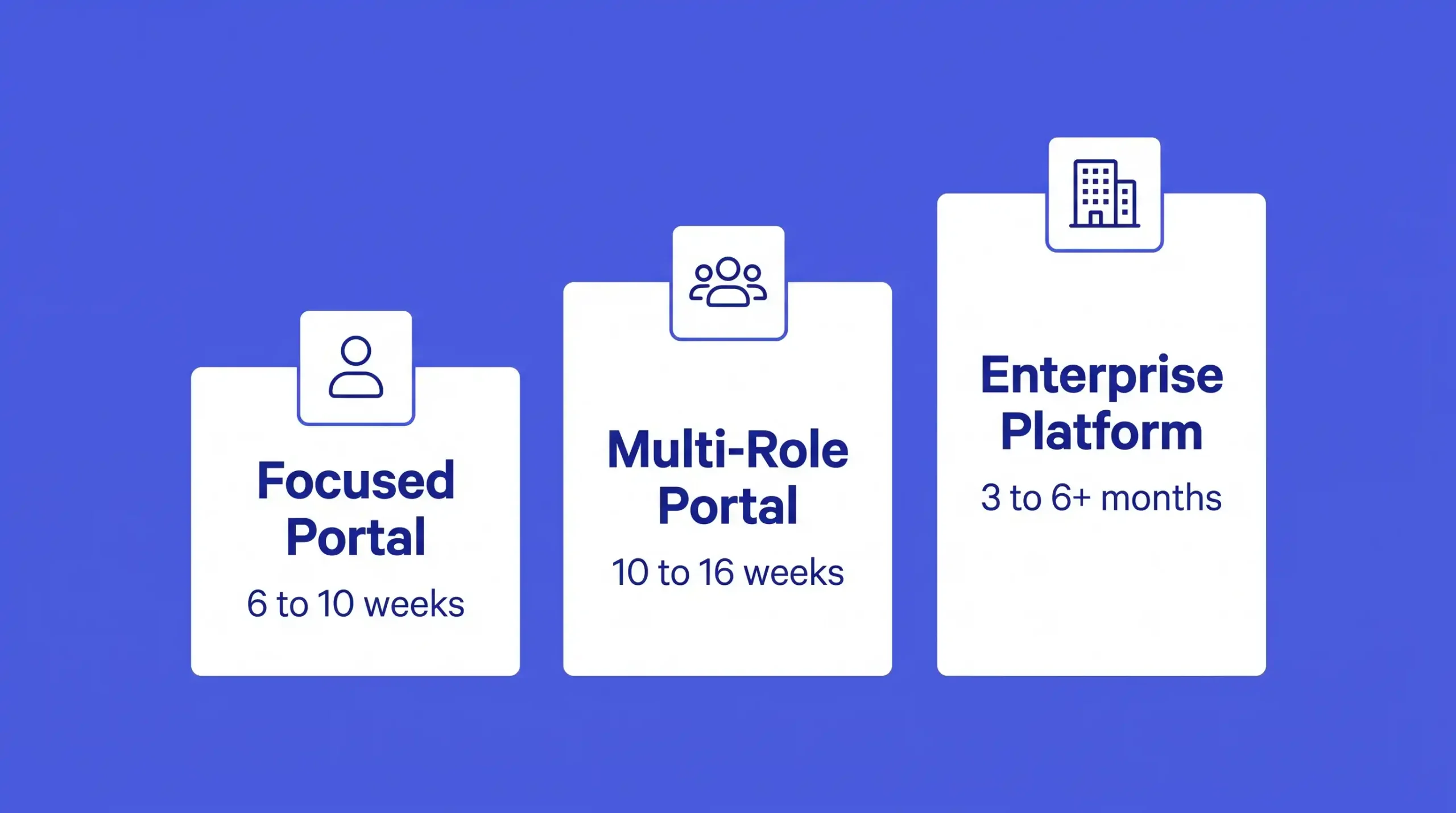
| Focused Portal | 12,500 to 50,000 | 6 to 10 weeks | One user type, one main workflow |
| Multi-Role Business Portal | 50,000 to 180,000 | 10 to 16 weeks | Several user types, approvals, integrations |
| Complex Enterprise Platform | 180,000 to 500,000+ | 3 to 6+ months | Many departments, ERP, custom logic |
These are market estimates. Your final price depends on your workflows, users, and integrations.
What Is a B2B Portal?
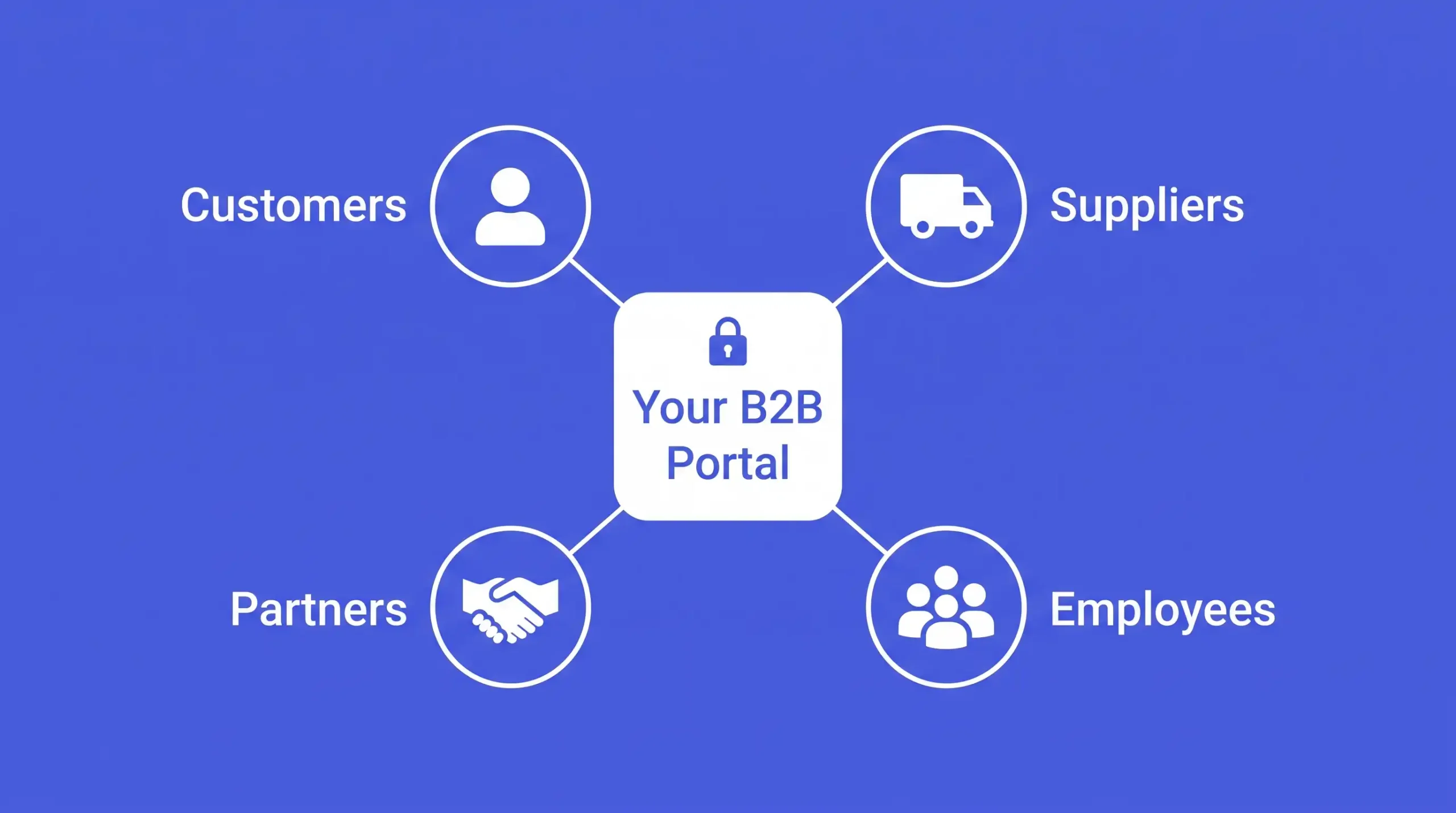
A B2B portal is a secure online platform where your business works with other businesses. It gives customers, suppliers, dealers, partners, or employees their own login, so they can place orders, upload documents, track approvals, view invoices, and get updates without calling or messaging your team.
Unlike a normal website, a portal is a working system. It has user accounts, permissions, a database, an admin dashboard, and usually connects to tools you already use, such as your ERP, CRM, or accounting software.
B2B Portal Development Cost in Saudi Arabia at a Glance
Here is what you generally get at each price level.
SAR 12,500 to 50,000: Focused Portal
A clean, custom portal for one main purpose. For example, a client portal where customers view orders and invoices, or a supplier portal for purchase orders and document uploads. Includes secure login, basic roles, an admin dashboard, document management, simple approvals, and basic API connections.
SAR 50,000 to 180,000: Multi-Role Business Portal
Several user types (customers, suppliers, finance, managers) with different permissions. Multi-step approval workflows, reports, bilingual Arabic and English interface, and integrations with systems like Odoo, Zoho, or Salesforce.
SAR 180,000 to 500,000+: Enterprise Platform
Large systems that serve many departments or thousands of users. Deep ERP integration (SAP, Oracle, Microsoft Dynamics), inventory and pricing logic, payment gateways, ZATCA e-invoicing, Nafath login, advanced analytics, data migration, and high security standards.
B2B Portal Cost by Portal Type
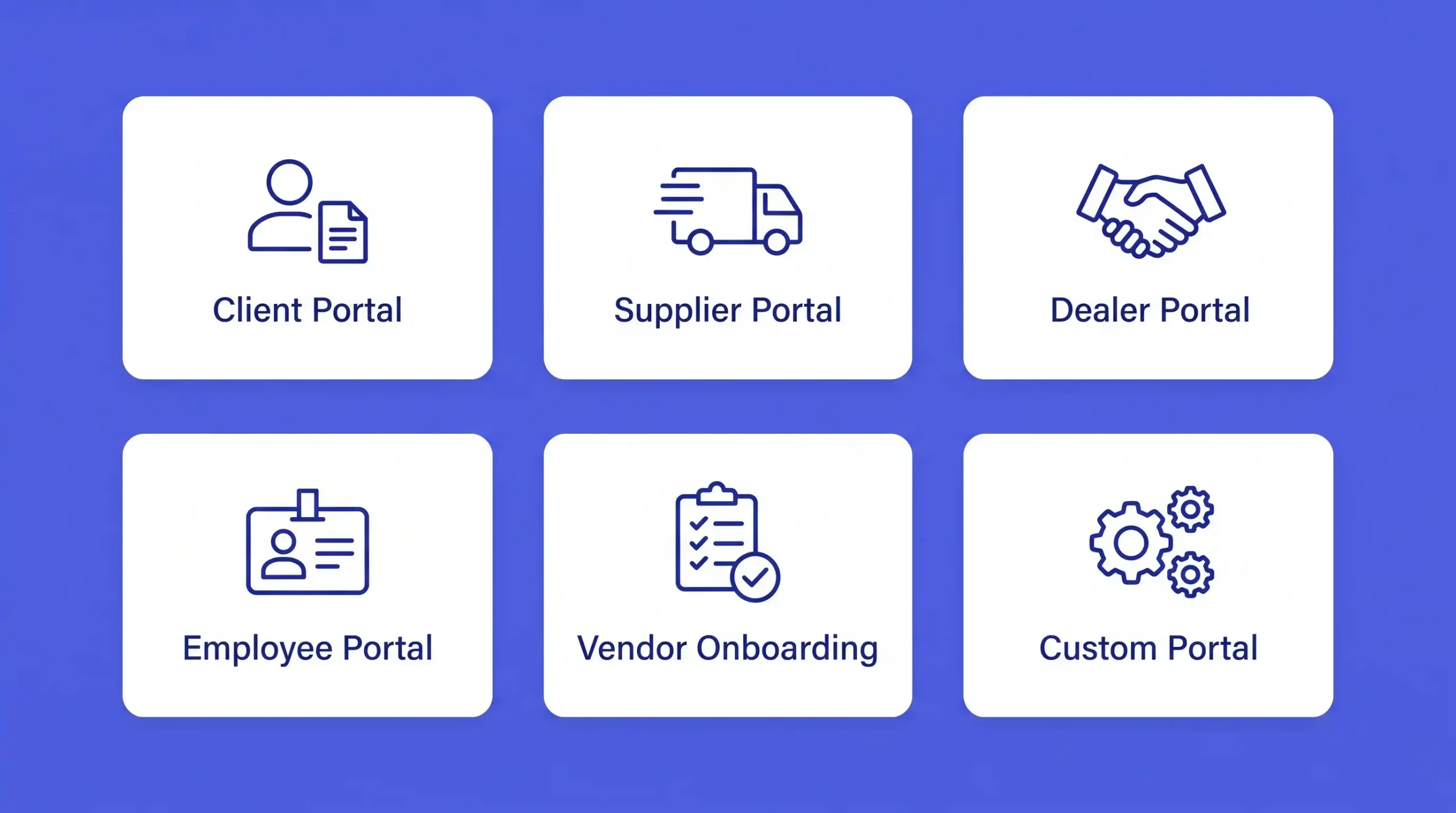
Different portals solve different problems, and that changes the price.
Client Portal
Estimated cost: SAR 15,000 to 90,000
Lets customers view orders, quotations, invoices, contracts, project progress, and support requests. Popular with service businesses, logistics firms, contractors, and property companies.
Supplier Portal
Estimated cost: SAR 25,000 to 150,000
Manages purchase orders, RFQs, quotations, delivery schedules, invoices, and payment status. Common in construction, manufacturing, retail, and hospitality. Costs rise when it connects to your procurement or ERP system.
Dealer and Partner Portal
Estimated cost: SAR 40,000 to 200,000+
Gives dealers and distributors access to product catalogues, partner pricing, stock availability, orders, and incentives. Usually needs live inventory and pricing integration, which adds to the cost.
Employee Portal
Estimated cost: SAR 20,000 to 120,000
Brings HR requests, expense claims, approvals, policies, tasks, and announcements into one place. Cost depends on the number of departments and approval levels.
Vendor Onboarding Portal
Estimated cost: SAR 20,000 to 100,000
Turns vendor registration into a trackable process. Collects commercial registration (CR), VAT certificates, licences, bank details, and compliance documents, with approval stages and renewal reminders.
Custom Operations Portal
Estimated cost: SAR 60,000 to 500,000+
Combines several portal types into one system built around your exact operations. Best for businesses replacing many spreadsheets or legacy tools.
Not sure which portal type fits your business? Nukhta Studio can review your workflow and recommend the right setup. Schedule a Portal Consultation or call +966 50 993 0979.
10 Factors That Affect B2B Portal Cost

1. Number of User Roles
Every user type (customer, supplier, manager, finance, admin) needs its own screens and permissions. More roles mean more design, development, and testing.
2. Workflows and Approval Logic
A simple “submit and approve” flow is quick to build. Multi-level approvals with conditions, such as “orders above SAR 50,000 go to the CFO,” take more time.
3. Integrations
Connecting your portal to ERP (Odoo, SAP, Oracle), CRM (Salesforce, Zoho, HubSpot), accounting, inventory, or messaging tools (WhatsApp, Twilio, email) is often the biggest cost driver. A simple API connection may take days, while a deep two-way ERP sync can take weeks.
4. Custom UI and UX Design
A template look is cheaper, but a custom design that matches your brand and is easy for users makes adoption much higher.
5. Arabic and English Support
A true bilingual portal needs right to left (RTL) and left to right (LTR) layouts, translated content, and proper Arabic fonts. This usually adds 15 to 30% to design and front end work.
6. Dashboards and Reporting
Basic reports are simple. Live dashboards with charts, filters, and exports require more backend work.
7. Payments and Invoicing
Adding payment gateways (Mada, Apple Pay, credit cards, bank transfers through providers like HyperPay, Moyasar, or Tap) and invoice generation increases cost.
8. Security Level
Two factor authentication, encryption, audit logs, and session controls are essential. Higher security needs mean more work but protect your data and reputation.
9. Data Migration
Moving existing customer, supplier, or product data from spreadsheets or old systems needs cleaning and mapping. Large or messy datasets add cost.
10. Development Team
Who builds your portal affects price, quality, and long term support. More on this below.
Saudi Specific Costs You Should Plan For
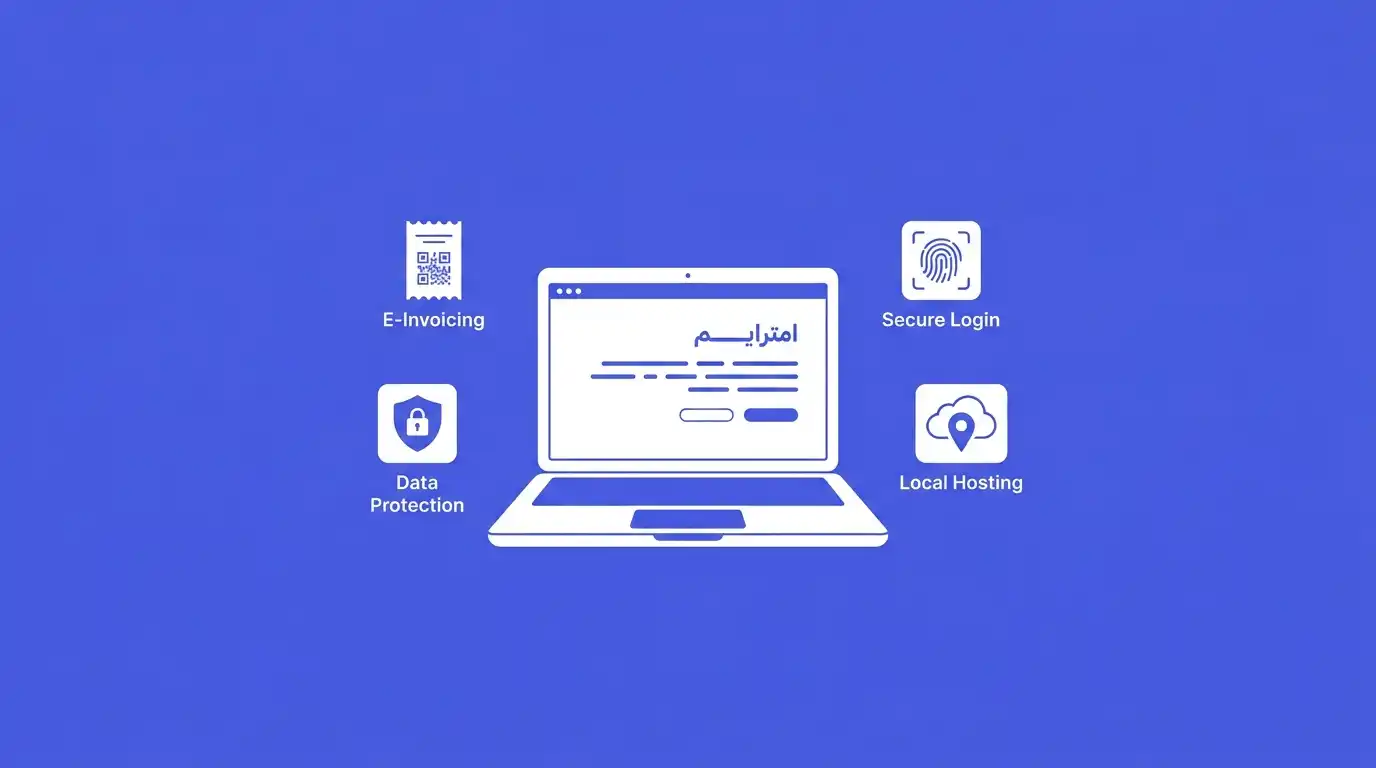
Many international cost guides miss this part. In Saudi Arabia, a portal often needs features that match local regulations and user expectations.
ZATCA E-Invoicing (Fatoora)
If your portal issues invoices, they may need to comply with ZATCA’s e-invoicing rules, including QR codes, XML format, and integration with the Fatoora platform in Phase 2. Estimated added cost: SAR 8,000 to 40,000, depending on whether your ERP already handles it.
Nafath Login
For portals that need verified identity, integration with Nafath (the national single sign on) builds trust and security. Estimated added cost: SAR 10,000 to 35,000, plus any provider fees.
PDPL Compliance
Saudi Arabia’s Personal Data Protection Law (PDPL), overseen by SDAIA, sets rules on how you collect, store, and use personal data. Your portal may need consent screens, access controls, data retention rules, and secure storage. Planning this from day one is cheaper than fixing it later.
Local Data Hosting
Some businesses, especially in government, finance, and healthcare, prefer or must host data inside Saudi Arabia. Local cloud hosting can cost more than global options but helps with compliance.
Arabic First Design
Saudi users expect a smooth Arabic experience, not a translated afterthought. Good RTL design is a real investment that pays off in adoption.
Cost Breakdown by Development Stage
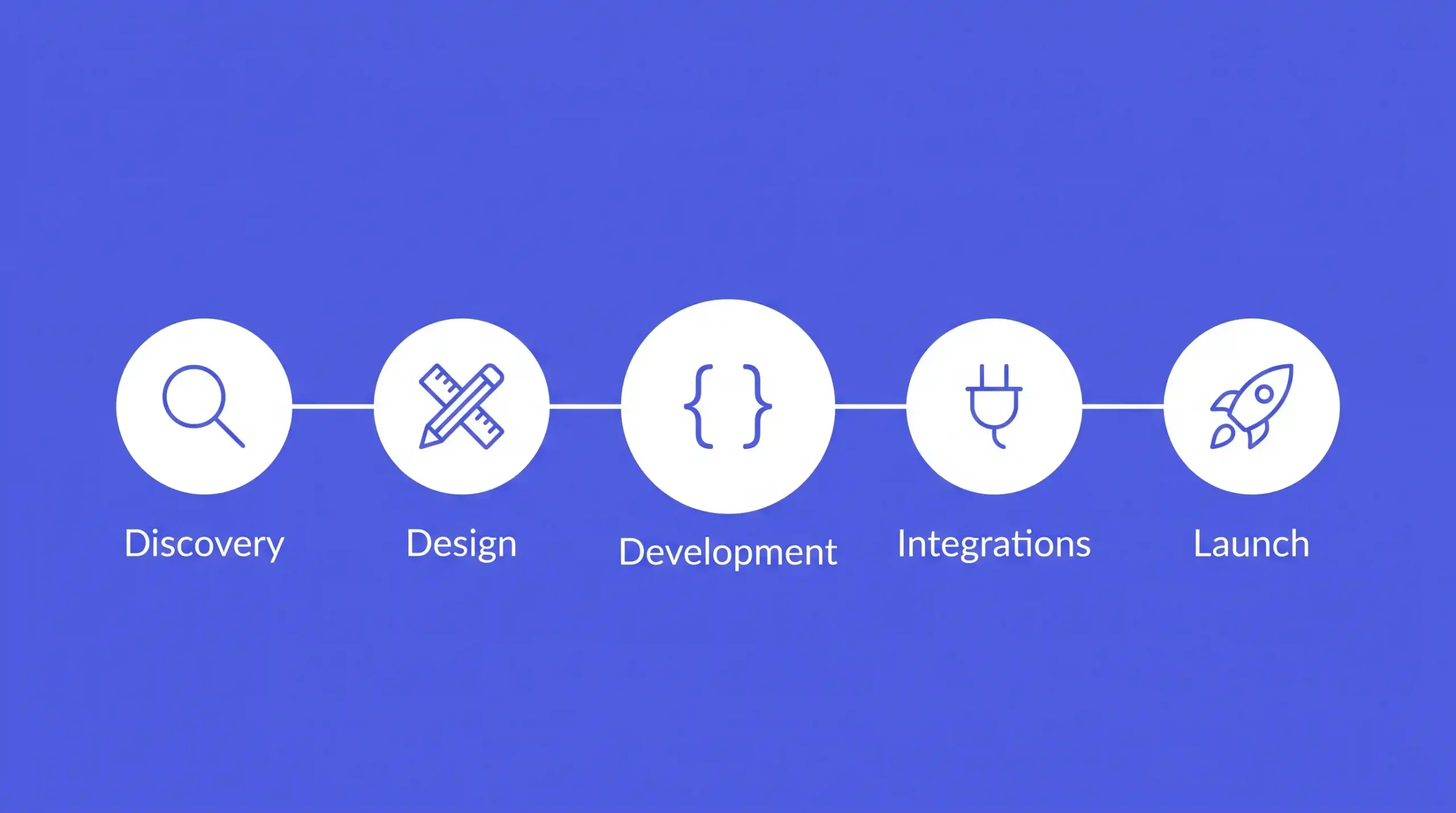
Here is roughly how your budget is spread across a typical project.
| Stage | Share of Budget | What Happens |
|---|---|---|
| Discovery and Planning | 10 to 15% | Map workflows, user roles, and requirements |
| UI and UX Design | 15 to 20% | Wireframes, screens, Arabic and English layouts |
| Front End and Back End Development | 40 to 50% | Build the portal, database, and admin panel |
| Integrations | 10 to 20% | Connect ERP, CRM, payments, ZATCA, Nafath |
| Testing and Launch | 10 to 15% | Quality checks, security testing, go live |
Skipping discovery to save money is one of the most common mistakes. A clear scope prevents expensive changes later.
Hidden and Ongoing Costs
The build is only part of the picture. Plan for these too:
- Hosting and cloud servers: SAR 300 to 5,000+ per month depending on traffic and setup.
- Maintenance and support: Usually 15 to 20% of the build cost per year for bug fixes, updates, and security patches.
- Third party licences: SMS, email, maps, payment gateway fees, or API subscriptions.
- New features: Most portals grow after launch as teams ask for more.
- Training: Helping your staff, suppliers, and customers use the portal.
- Domain and SSL certificates: Small but necessary.
Custom Portal vs SaaS vs ERP Add-On
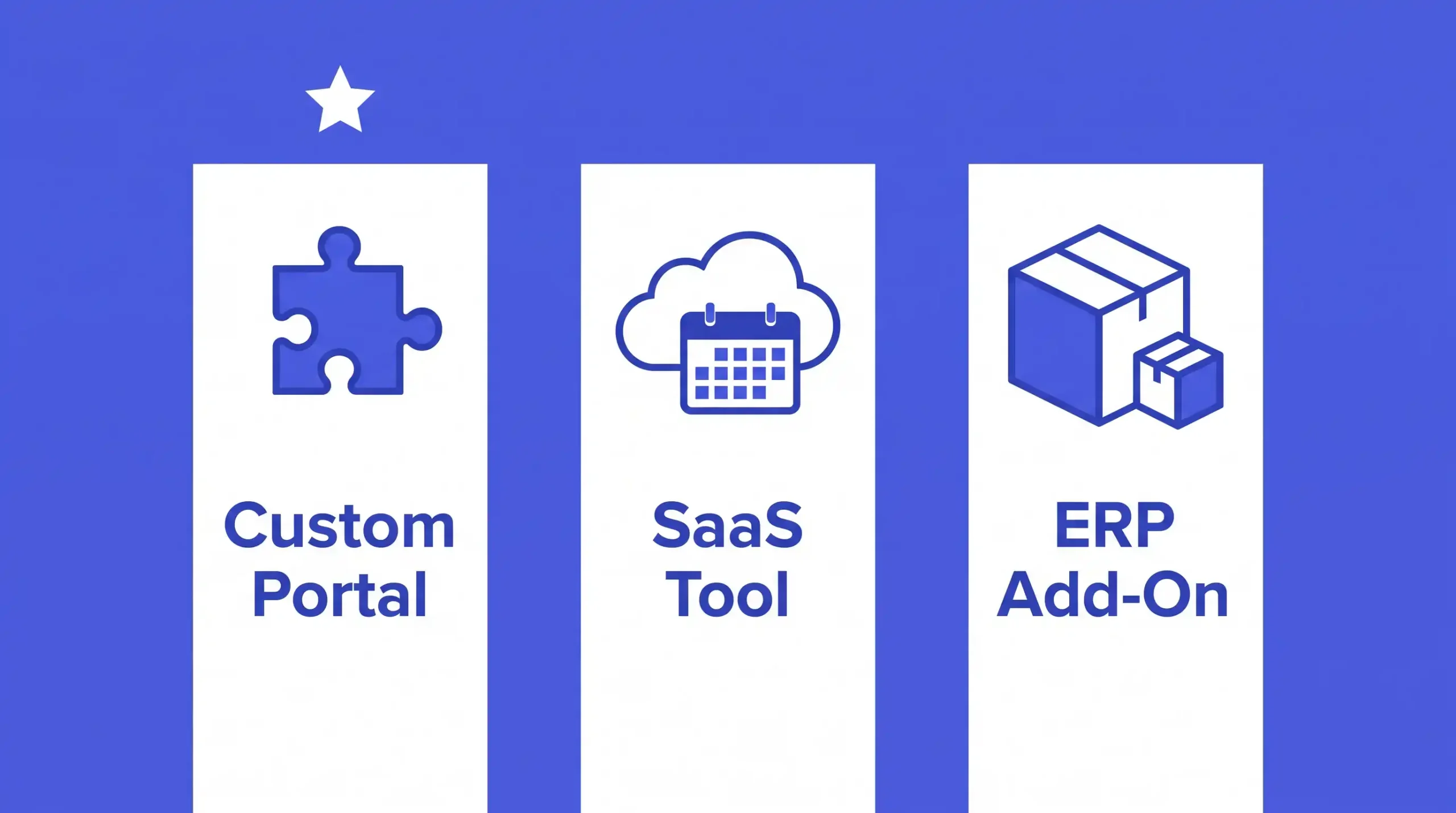
| Option | Upfront Cost | Monthly Cost | Flexibility | Best For |
|---|---|---|---|---|
| Custom Portal | Medium to high | Low (hosting only) | Full control | Unique workflows, long term growth |
| SaaS Portal Tool | Low | Per user fees, grows over time | Limited | Simple, standard needs |
| ERP Add-On Module | Medium | Licence fees | Limited to ERP features | Businesses fully on one ERP |
SaaS tools look cheaper at first, but per user fees add up fast as you add suppliers or dealers. They also may not support Arabic, ZATCA, or your exact approval steps. A custom portal costs more upfront but you own it, and it fits how your business actually works.
Freelancer vs Local Agency vs Offshore Team
Freelancer: Lowest price, but risky for business critical systems. Limited capacity for design, backend, security, and ongoing support.
Offshore company: Can be affordable, but time zones, language, and limited understanding of Saudi rules (ZATCA, PDPL, Nafath) can cause delays and rework.
Local agency in Riyadh: Understands Saudi business culture, Arabic users, and local regulations. Easier communication, face to face meetings, and reliable long term support.
How Long Does It Take to Build a B2B Portal?
- Focused portal: 6 to 10 weeks
- Multi-role business portal: 10 to 16 weeks
- Complex enterprise platform: 3 to 6+ months
Timelines grow with the number of roles, integrations, and approval stages. Delays usually come from unclear requirements or slow feedback, which is why a proper planning phase matters.
How to Reduce B2B Portal Cost Without Losing Quality
- Start with an MVP. Launch the most important workflow first, then add modules in phases.
- Map your process before development. Clear requirements prevent costly changes.
- Reuse existing systems. Connect to your current ERP or CRM instead of rebuilding features.
- Prioritise features. Separate “must have” from “nice to have.”
- Choose scalable technology. Platforms like Supabase or Firebase can lower backend costs for some projects.
- Work with one team for design, development, and support. This avoids handover problems and extra fees.
Is a B2B Portal Worth the Investment?
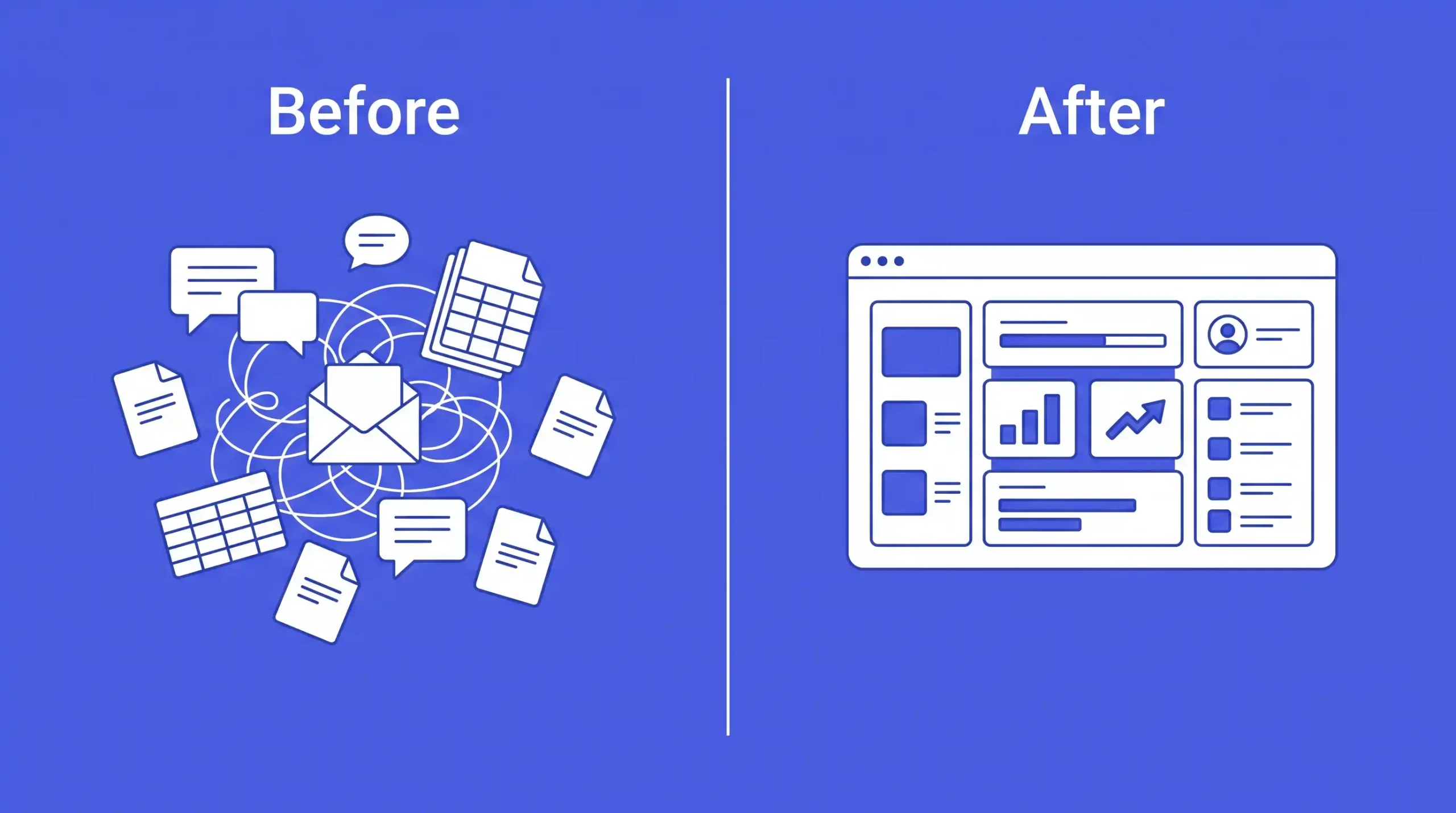
Think about how much time your team spends each week on:
- Answering “where is my order?” or “has my invoice been paid?”
- Chasing supplier documents and approvals
- Fixing spreadsheet errors
- Re-entering data between systems
Simple ROI example: If five employees each save 8 hours a week, that is 40 hours weekly, or about 2,000 hours a year. At an average cost of SAR 60 per hour, that is around SAR 120,000 a year in saved time. A SAR 60,000 portal could pay for itself in about six months, before counting fewer errors, faster payments, and happier customers.
A B2B portal also supports Vision 2030 goals around digital transformation, helping your business look modern and professional to partners and investors.
How to Get an Accurate B2B Portal Quote
Before contacting a developer, prepare answers to these questions:
- Who will use the portal? (customers, suppliers, dealers, employees)
- What tasks should each user complete?
- What approval steps do you need?
- Which systems should it connect to? (ERP, CRM, accounting, payments)
- Do you need Arabic and English?
- Do you need ZATCA e-invoicing or Nafath login?
- How many users do you expect now and in two years?
- Do you have existing data to migrate?
- What is your target launch date and budget range?
The clearer your answers, the more accurate your quote will be.
Why Businesses in Riyadh Choose Nukhta Studio for B2B Portal Development
Nukhta Studio is a B2B portal development company in Riyadh that builds secure portals around the way your business actually operates, not around a generic template.
Here is what makes the difference:
- Workflow first approach: Nukhta maps your real process, users, and approvals before writing any code.
- Portal, backend, and admin built together: Your customer facing portal, database, and admin controls are planned as one connected system.
- Custom integrations: Connect with Salesforce, Zoho, Odoo, Firebase, Supabase, Twilio, and other tools you already use.
- Arabic and English support: Proper RTL and LTR layouts for both language users.
- Built for Saudi requirements: Secure authentication, role based permissions, PDPL considerations, and integration with Nafath, ZATCA, and other local services when needed.
- Transparent pricing: Focused portals start from SAR 12,500, with final pricing confirmed after reviewing your workflows and integrations.
One example is the Naseej Real Estate Partner Portal, a platform concept connecting developers, brokers, buyers, and sales teams. It includes live unit inventory, reservations, buyer KYC documents, payment installments, broker commission tracking, approvals, and sales reports in one place.
Ready to bring your operations into one system?
Tell Nukhta Studio how your customers, suppliers, and teams work today, and get a clear scope, timeline, and price for your portal.
👉 Book a Free Portal Consultation
📞 Call or WhatsApp: +966 50 993 0979
Frequently Asked Questions
How much does a simple B2B portal cost in Saudi Arabia?
A focused portal with one main workflow and limited roles usually costs between SAR 12,500 and SAR 50,000. At Nukhta Studio, focused portals start from SAR 12,500.
Why do B2B portals cost more than websites?
A website mainly shows information. A B2B portal is a working system with user accounts, permissions, databases, workflows, approvals, and integrations, which takes more development.
Can one portal serve customers, suppliers, and employees?
Yes. A single portal can support several user types, each with their own access and permissions
Can a B2B portal integrate with our ERP or CRM?
Yes. Portals can connect with systems like Odoo, SAP, Zoho, and Salesforce. Integration complexity is one of the main cost factors
Do I need ZATCA compliance in my portal?
If your portal creates or sends tax invoices, it should follow ZATCA e-invoicing rules. If invoices are created in your ERP, the portal can simply display them.
How much does maintenance cost?
Plan for roughly 15 to 20% of the build cost each year for updates, security, and support.
How long does it take to build a B2B portal?
From 6 weeks for a focused portal to 6+ months for a complex enterprise platform.
Can existing data be migrated to the new portal?
Yes. Data from spreadsheets or older systems can be cleaned and moved into the new portal.
Conclusion
The cost to build a B2B portal in Saudi Arabia ranges from about SAR 12,500 for a focused portal to SAR 500,000+ for a complex enterprise platform. The biggest cost drivers are user roles, workflows, integrations, bilingual design, and Saudi requirements like ZATCA, Nafath, and PDPL.
The smartest approach is to map your workflow first, start with the features that matter most, and grow the portal in phases. With the right partner, your portal can quickly pay for itself through saved time, fewer errors, and better relationships with customers and suppliers.
Get a clear price for your B2B portal.
Share your workflow with Nukhta Studio and receive a tailored scope, timeline, and quote.
Schedule Your Portal Consultation | +966 50 993 0979

1 thought on “B2B Portal Development Cost in Saudi Arabia (2026 SAR Guide)”